



For many startups, the biggest challenge is not building the product — it’s securing the funding needed to turn an idea into a real business.
Angel investors often play a critical role at this stage. These early‑stage investors provide capital, mentorship, and industry connections that help startups grow before they become attractive to venture capital firms.
Understanding how angel investment works and how to attract the right investors can significantly increase a startup’s chances of securing funding. In this guide, we explore what angel investors look for and how startups can position themselves to secure angel investment successfully.
Angel investment refers to funding provided by high‑net‑worth individuals who invest their personal capital in early‑stage startups in exchange for equity or convertible debt.
Typical angel investment range:
Stage | Investment Amount |
|---|---|
Pre‑seed | $10K – $100K |
Seed | $100K – $500K |
Angel syndicates | $500K – $2M |
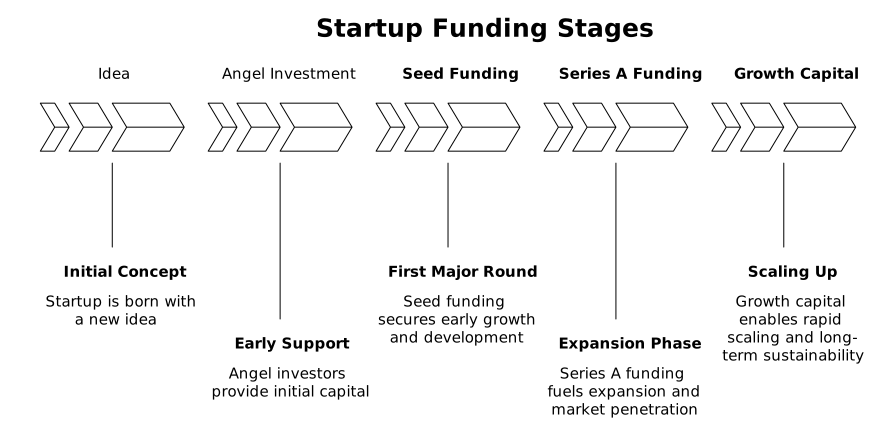
Angel investors help startups through:
Early‑stage capital
Strategic mentorship
Industry connections
Faster decision‑making
Flexible investment structures
Factor | What Investors Want |
|---|---|
Founding Team | Skills, experience, commitment |
Market Opportunity | Large addressable market |
Product | Unique solution to real problem |
Traction | Early customers or growth |
Revenue Model | Clear path to profitability |
Attracting angel investors requires a strategic approach:
Craft a Compelling Story: Beyond numbers, investors are attracted to a vision. What problem does your startup solve? Why is it pivotal?
Showcase Market Potential: Demonstrate a clear market need, size, and your solution’s scalability.
Network Relentlessly: Attend startup events, join entrepreneurial communities, and leverage platforms like LinkedIn to connect with potential angel investors.
Design an Insightful Pitch Deck: This should encapsulate your business model, market research, financial projections, and growth strategy concisely.
Problem
Solution
Market size
Product demo
Business model
Traction
Financial projections
Funding ask
Every startup’s fundraising journey is different, but certain mistakes can significantly reduce the chances of securing angel investment. Being aware of these pitfalls can help founders approach investors more strategically and build stronger credibility.
1. Setting an Unrealistic Valuation
Startup valuation plays a critical role during investment discussions. An excessively high valuation can discourage investors by making the opportunity appear overpriced, while a very low valuation may lead founders to give away more equity than necessary.
2. Failing to Research Potential Investors
Not all angel investors invest in every industry or stage. Founders should research an investor’s previous investments, sector interests, and investment approach before pitching. This helps tailor the pitch and increases the likelihood of meaningful engagement.
3. Overpromising Results
Ambition is important, but unrealistic promises can undermine trust. Investors value transparency and realistic projections. It is better to present achievable growth plans and clearly explain the strategy for reaching key milestones.
Securing angel investment requires more than a promising idea. Investors expect startups to demonstrate strong financial planning, realistic valuations, and a clear roadmap for growth. This is where the right financial guidance can make a significant difference.
EaseUp works closely with founders to turn their business vision into investor‑ready financial strategies. From building detailed financial projections and conducting accurate startup valuations to structuring compelling financial models, EaseUp helps startups present their business with clarity and confidence.
With deep experience supporting early‑stage companies, the EaseUp team ensures that founders are fully prepared for investor conversations—helping them communicate their growth potential, negotiate valuations effectively, and approach funding discussions with credibility.
Angel investors invest their personal funds in early‑stage startups, while venture capital firms invest pooled funds from multiple investors.
Angel investments usually range from $10,000 to $500,000 depending on the startup stage.
Angel investors usually receive equity ownership or convertible debt in the startup.
Startups typically approach angel investors during the pre‑seed or seed stage.
Startups can connect with angel investors through networking events, startup accelerators, investor platforms, and referrals.
Connect with EaseUp’s financial experts today and take the first step toward building a strong, investor‑ready financial foundation for your business.

Your trusted partner for all your Financial needs.


Finance Management
Strategic Services